
When medical treatment falls short, the consequences can be immediate, life-changing, and deeply personal. People often come to us not just with questions about compensation, but with a need for clarity, reassurance, and a solicitor who will take the time to understand what has happened.
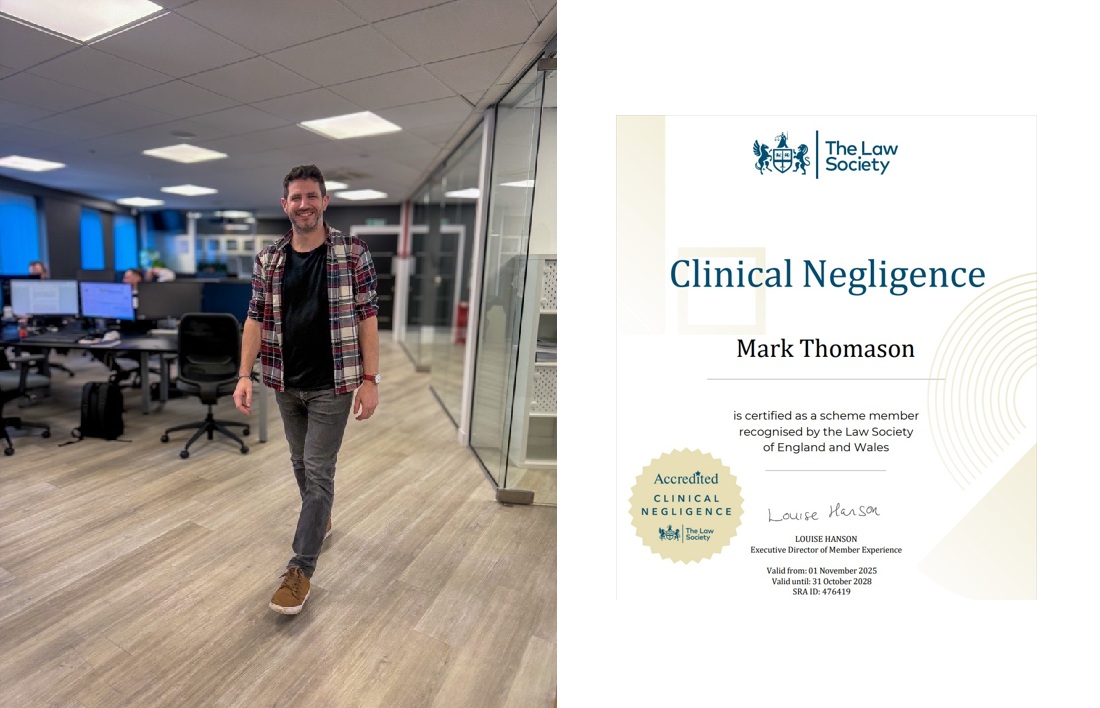
That’s why we’re proud to share that Mark Thomason, Head of Personal Injury at Optimal Solicitors, has been successfully re-accredited by The Law Society for Clinical Negligence.
At a Glance
Who Is Mark Thomason?
Mark Thomason has been successfully re-accredited by The Law Society for Clinical Negligence (confirmed 3 February 2026). The accreditation is a recognised quality standard for solicitors handling claimant clinical negligence cases, reflecting specialist experience and ongoing professional development.
What Does This Mean for Clients?
At Optimal Solicitors, Mark combines rigorous case planning with a calm, client-first approach. The Law Society accreditation provides independent assurance that your clinical negligence case is handled to a recognised professional standard.
What Is The Law Society Clinical Negligence Accreditation?
Clinical negligence is one of the most demanding areas of claimant work. A case can involve multiple stages of treatment, complex medical records, detailed causation questions, and expert evidence throughout. It’s rarely about a single moment. It’s about identifying what should have happened, what actually happened, and what difference that made to a person’s life.
The Law Society’s Clinical Negligence Accreditation exists to help the public identify solicitors who meet set standards in this specialist field. In simple terms, it’s a recognised marker that a solicitor working in clinical negligence can demonstrate the right level of experience and continued competence in a highly technical area of law.
Why Re-Accreditation Matters When Choosing a Clinical Negligence Solicitor
Re-accreditation isn’t a one-time badge. It matters because it shows those standards are being maintained over time, not simply achieved once and forgotten. For clients, that translates into greater confidence that their solicitor is working at a recognised level in clinical negligence and remains committed to ongoing professional development, case quality, and best practice.
Mark Thomason: A Client-First Clinical Negligence Solicitor
Mark is known across the firm for being clear, calm, and relentlessly focused on what clients need most: understanding, progress, and a plan. His approach is built on the belief that excellent litigation doesn’t stop at the paperwork, but it starts with genuinely getting to know the person behind the claim and making sure they feel informed and supported throughout.
“I’m really pleased to have been re-accredited by The Law Society for clinical negligence. For me, it is about giving clients confidence that they are in safe hands. My priority is to listen carefully, explain things clearly, and make sure clients feel supported throughout the claim.”
Mark often says the legal issues are only part of the story. What matters just as much is understanding how the injury has affected someone’s everyday life. In his words:
“Until you understand the client’s life and needs, you can’t appreciate the impact these cases can have.”
That principle shapes how Mark approaches clinical negligence claims: looking beyond the clinical timeline to understand the real-world impact, and building cases that reflect the full picture — medically, legally, and personally.
Legal Expertise That Supports Real Outcomes
Mark leads Optimal Solicitors’ Personal Injury department and brings over 15 years’ litigation experience. He is recognised for clear, pragmatic advocacy in high-value and complex claims, with a track record that includes serious and life-changing injuries and challenging clinical negligence disputes.
In practice, this means clients can expect a case strategy that is structured and evidence-led, but also explained in plain English, with honest advice, realistic expectations, and a focus on securing the support people need to move forward.
How Our Clinical Negligence Team Supports Medical Negligence Claims
Clinical negligence claims are rarely only about what happened in a hospital or GP setting. They’re often about what happened afterwards: the knock-on impact on health, work, family life, confidence, independence, and long-term recovery. We take the time to understand those consequences properly, because the strength of a claim often depends on the detail, and the detail is always personal.
Our team focuses on careful early investigation, the right medical evidence, and clear guidance at every stage. If a claim is viable, we build it with precision and purpose, while making sure the client never feels left behind by the process.
Speak to a Clinical Negligence Solicitor at Optimal Solicitors
If you believe you or a loved one has been harmed because medical care fell below an acceptable standard, you do not have to go through the process alone. We will listen carefully, look at the key details, and explain your options clearly, including whether a claim is likely to be viable.
Clinical Negligence Accreditation FAQs
What is The Law Society Clinical Negligence Accreditation?
It’s a recognised quality standard for solicitors who handle claimant clinical negligence work. It helps the public identify practitioners who meet eligibility requirements and maintain specialist knowledge and experience in this area.
Why does re-accreditation matter?
Re-accreditation shows the solicitor continues to meet the scheme’s standards over time. For clients, it’s reassurance that expertise and professional development are ongoing — not a one-off milestone.
Does using a Law Society accredited clinical negligence solicitor guarantee I will win?
No solicitor can guarantee an outcome. However, accreditation can give clients added confidence that their solicitor has proven experience in clinical negligence and understands how to investigate and run complex claims properly.
What types of issues can clinical negligence claims involve?
Clinical negligence claims can involve delayed diagnosis or misdiagnosis, surgical errors, medication mistakes, failures in maternity care, issues in emergency treatment, and problems with aftercare where substandard care causes avoidable harm.
How do I know if I may have a clinical negligence claim?
A claim usually depends on whether the care was negligent and whether that negligence caused avoidable injury or made outcomes worse. A solicitor can review the timeline and key evidence and advise you on prospects and next steps.